


You can tell within a week when a cleaning programme isn’t holding. Overflowing bins by the lifts, smeared glass in reception, a washroom out of towels by mid-morning.
Home > Insights & News > How to Measure Your Cleaning Company’s Performance: KPIs, Audits and Scoring Frameworks for FMs
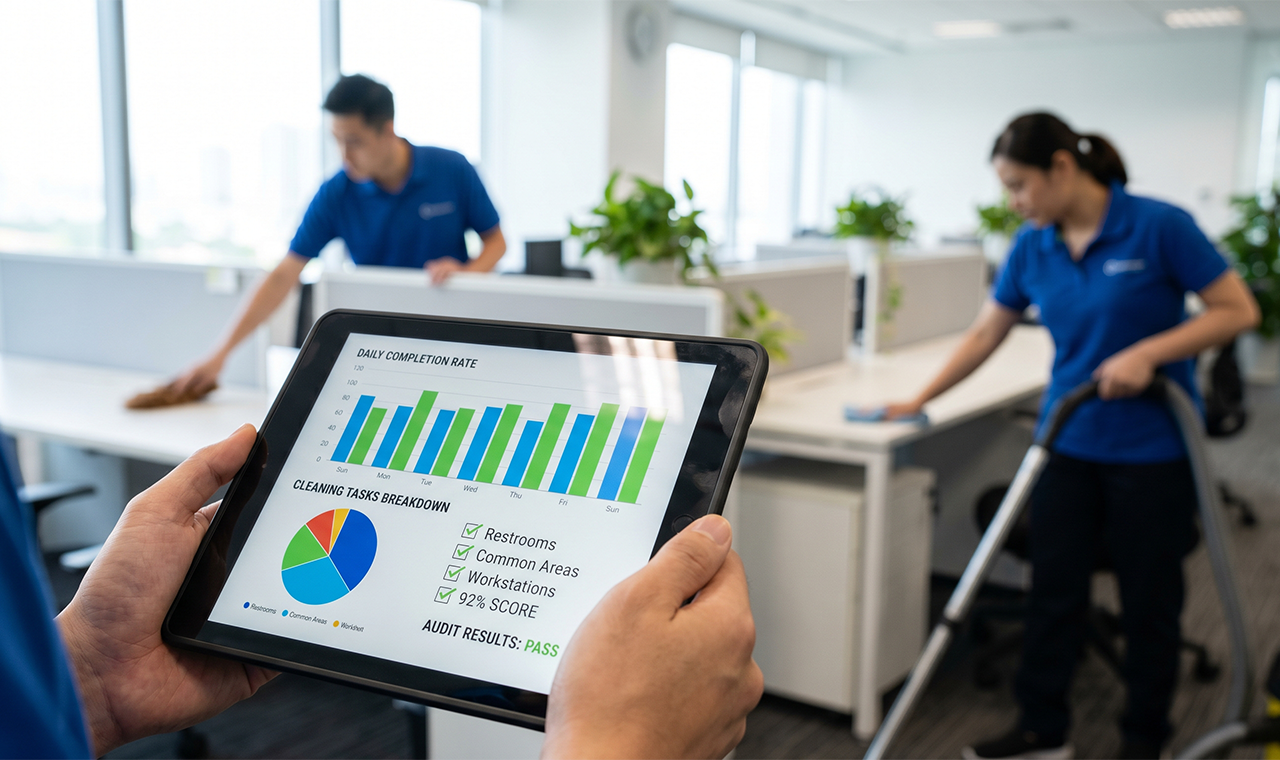

Most cleaning contracts don’t fail because people stop doing the work. They fail because no one measures whether the work is actually delivering results.
You can have a schedule, a team, and a checklist in place. But without clear cleaning company performance KPIs, there is no reliable way to prove quality, spot issues early, or improve consistency across a site.
For facilities managers and procurement teams, that gap matters. Without measurable performance, costs rise quietly while standards become harder to verify. You are not just managing cleaning; you are managing standards, compliance, and cost. That requires data you can trust, not assumptions.
At The Clean Space, KPI frameworks are built into service delivery to ensure performance is visible, measurable, and consistently maintained.
Cleaning company performance KPIs are measurable metrics used to track cleaning quality, consistency, and efficiency. The most important include audit scores (typically 85–95%), SLA compliance (90–98%), response times, and cost per square metre. Together, these KPIs show whether cleaning standards are being met consistently and where performance needs improvement.
Cleaning company performance KPIs measure how well a cleaning service delivers against agreed standards. They turn routine tasks into something you can track, compare, and improve over time.
In most contracts, these KPIs sit within a Service Level Agreement (SLA). Instead of relying on assumptions, the SLA defines what “good” looks like and how it is measured.
On-site, performance is tracked through:
This structure creates visibility across the site, making it easier to identify where standards hold, where they drop, and what needs attention.
In simple terms, KPIs answer three practical questions:
That shift, from activity to outcomes, is what makes KPIs valuable.
Not all metrics carry equal weight. The most useful cleaning KPIs focus on results you can verify, not just tasks completed.

Many providers list these KPIs but stop there. That creates a gap. Without context or benchmarks, the numbers don’t tell you much.
What matters is how these KPIs connect. In practice, isolated metrics rarely tell the full story. It is the relationship between these KPIs that highlights operational issues early. A drop in audit scores, for example, often links to missed frequencies or delayed responses. When you track them together, patterns become clear.
Each KPI should be tracked against a defined benchmark and reviewed consistently. Without this, even accurate data becomes difficult to act on. The goal is not just to collect metrics, but to use them to guide operational decisions and maintain standards.
Tracking KPIs only works when the process behind them is consistent. Without structure, results become unreliable.

The process itself is straightforward, but it depends on discipline. Each step builds on the last. If one part is inconsistent, the whole system weakens.
The steps above rely on proper support. No accurate records could result in even well-defined KPIs losing value over time.
In practice, measurement depends on:
Many sites now rely on digital tools such as CAFM systems or mobile audit platforms to standardise data collection and improve reporting accuracy.
Results also vary by environment. A high-footfall office behaves differently from a low-use site. The same applies across sectors, whether commercial offices, healthcare settings, or kitchens operating under stricter hygiene controls.
That’s why KPI data should always be read in context. Numbers on their own don’t explain performance. They need to be interpreted against how the site actually operates.
Action steps:
If KPI tracking is inconsistent, it often reflects gaps in how audits, reporting, or accountability are structured. Reviewing this setup is usually the first step toward improving performance. When measurement is consistent, decisions become easier to make.
Once KPIs are in place, the next step is understanding what drives them.
Cleaning performance doesn’t drop without a reason. When scores fall or compliance slips, it usually reflects operational conditions rather than isolated mistakes.
Several factors shape performance:

Inputs above directly influence outcomes.
For example, higher footfall increases wear across floors and shared areas. If cleaning frequency stays the same, audit scores will decline. The issue isn’t the KPI; it’s the mismatch between demand and delivery.
The same pattern appears with training and equipment. Inconsistent technique or outdated tools reduce quality over time. This often shows up as lower SLA compliance and more reactive work.
KPI data becomes far more useful when read alongside these factors, as it allows you to identify root causes rather than reacting to surface-level issues.
In structured environments, KPI frameworks often align with recognised industry standards such as BICSc guidance or ISO-based quality management systems, ensuring consistency and accountability across sites.
KPIs only make sense when you know what “good” looks like. That’s where benchmarks come in.

These are realistic ranges, not fixed targets. They should always reflect the conditions of the site.
For instance, a healthcare environment working within strict hygiene frameworks (such as COSHH-guided practices) may require tighter control than a standard office setting. On the other hand, lower-use sites may operate within a broader range without affecting overall quality.
Benchmarks are most useful when applied with context. Used properly, they support clearer decision-making around service quality, cost efficiency, and contract performance.
In practice, these benchmarks are also used to assess service providers. Consistently meeting or exceeding KPI targets indicates reliable delivery, while repeated gaps may signal issues in staffing, scheduling, or supervision.
Even well-defined KPIs can fail if they’re applied without structure. Common issues include:
Too much data makes it harder to focus on what matters
Without targets, performance becomes subjective
Irregular checks lead to unreliable data
Different environments require different standards
These problems don’t just affect reporting. They lead to unclear standards, inconsistent delivery, and difficulty holding providers accountable. A smaller set of clear, consistent KPIs usually delivers better results than a long list of loosely tracked metrics.
Improving KPIs isn’t about collecting more data. It’s about strengthening the system behind the data.
Start with practical changes:
This process is most effective when supported by consistent reporting systems that allow performance to be reviewed at both site and contract level.
The focus should always stay on visibility. When performance is clearly tracked, it becomes easier to control quality, manage costs, and improve consistency.
A strong audit score typically falls between 85% and 95%, depending on the site and contract requirements.
Most office environments run audits weekly, while high-footfall sites may require more frequent checks or spot inspections.
Audit scores, SLA compliance, response times, and cleaning frequency provide the clearest view of performance.
Through structured audits, inspection checklists, and KPI tracking systems that monitor consistency over time.
If KPIs consistently fall below agreed benchmarks, it usually triggers a review of staffing, schedules, or processes to restore performance.
Responsibility is typically shared between the cleaning provider and site management, supported by audits, supervisor checks, and reporting systems.
Most providers use a combination of audit reports, supervisor logs, and digital dashboards to track and present KPI performance over time.
If you’re reviewing a cleaning contract, the key question is not just what is delivered, but how performance is measured and maintained over time.
A structured approach built around clear KPIs, regular audits, and consistent reporting gives you that visibility. When performance is measurable, it becomes easier to manage quality, control costs, and maintain standards across your site.
At The Clean Space, we support facilities teams with structured KPI frameworks, audit systems, and reporting processes designed to deliver consistent, measurable results.
Speak to our team to assess your current KPI structure, reporting process, and performance gaps across your site.

Wesley Smith is the Sales and Marketing Director at The Clean Space UK. He brings nearly 20 years of hands-on industry experience and a strong understanding of commercial strategy within professional hygiene services. As he puts it, “a strong brand is one that delivers the same experience it communicates in its messaging and content.
You can tell within a week when a cleaning programme isn’t holding. Overflowing bins by the lifts, smeared glass in reception, a washroom out of towels by mid-morning.

Most facilities managers never see a cleaning audit happen. A report arrives, it shows a score, and the contract carries on.
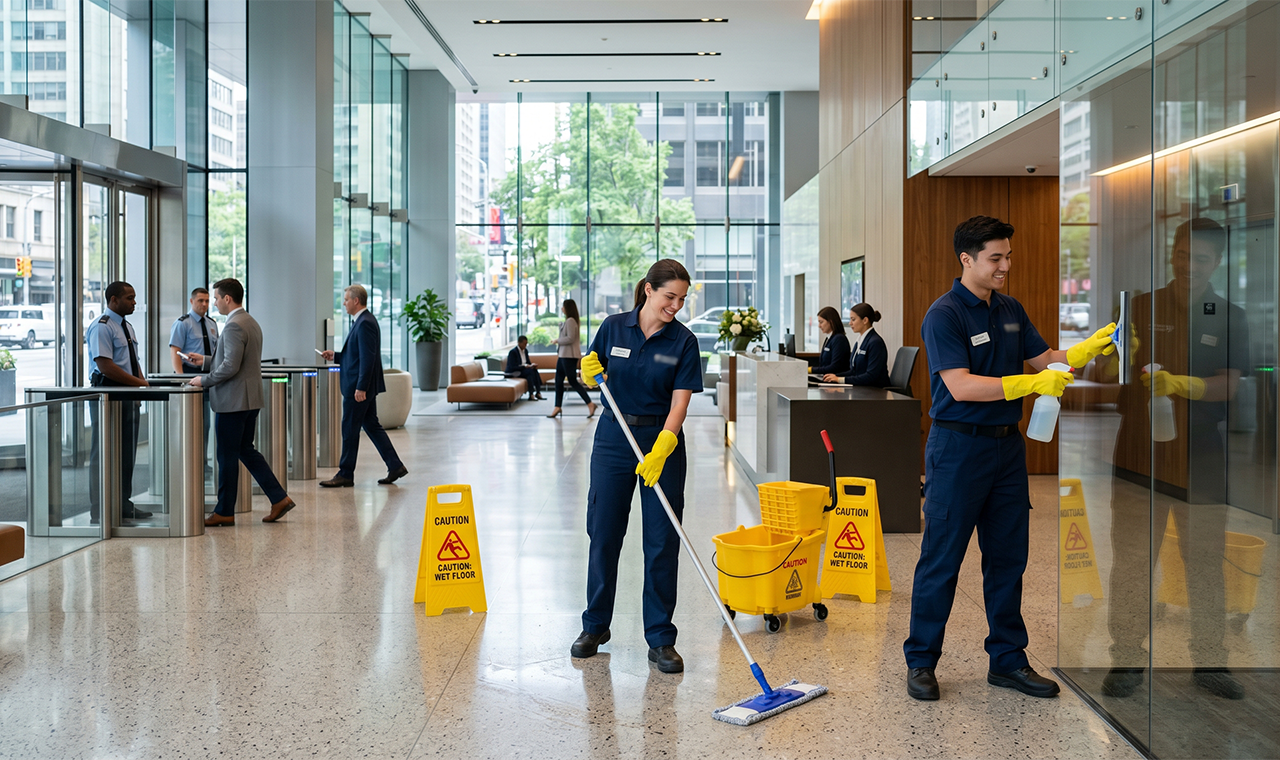
Commercial cleaning is a soft facilities management service, and it’s the most visible one your building has.
Cleaning Quote