

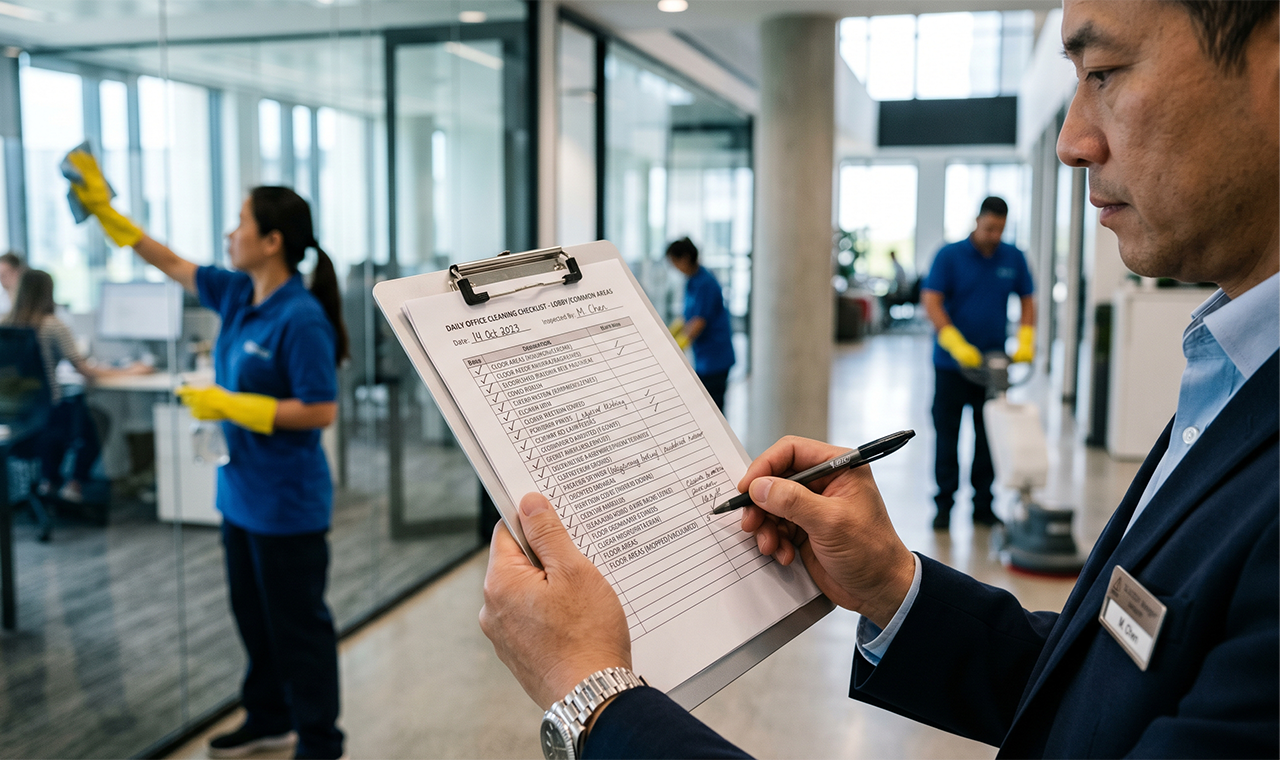
You can tell within a week when a cleaning programme isn’t holding. Overflowing bins by the lifts, smeared glass in reception, a washroom out of towels by mid-morning.
Home > Insights & News > Commercial Cleaning Cost UK Guide, Monthly Prices, Factors and Examples


Commercial cleaning cost UK varies based on building use, cleaning frequency, access hours, and contract structure. Businesses often compare quotes without understanding how scope or site conditions influence pricing. This guide explains realistic commercial cleaning prices in the UK, monthly contract ranges, and the operational factors that determine cost. You will learn how providers structure pricing, what drives higher quotes, and how a site survey helps businesses control long-term cleaning budgets.
Commercial cleaning costs in the UK depend on building size, cleaning frequency, access hours, and contract structure. Most businesses pay a fixed monthly fee rather than an hourly rate. Final pricing is confirmed through a site survey that defines scope, frequency, and access, making costs predictable and comparable across providers.
Commercial cleaning costs are built on operational realities, not flat rates. Pricing reflects the labour, supervision, time, and controls required to clean a specific site to an agreed standard. This is why costs are confirmed after a site survey, supported by a risk assessment, and managed under Control of Substances Hazardous to Health (COSHH) where chemicals or specialist tasks apply.
Cleaning risk planning often follows COSHH guidance and UK workplace hygiene standards, ensuring chemicals, supervision, and access controls are aligned with regulatory expectations.
Commercial cleaning costs are driven by how a site operates, not by flat or generic rates. Pricing reflects the time, labour, supervision, and controls needed to clean a specific building to an agreed standard. This is why accurate costs are confirmed after a site survey, where scope, frequency, access, and risk are clearly defined.

To see how these cost drivers apply to your site, arrange a site visit and scope review through our contact page.
Businesses reviewing pricing often compare different service scopes. You can review how structured contracts work within our commercial cleaning services page, which explains scope planning, supervision standards, and service delivery models used across UK sites.
Commercial cleaning prices in the UK are usually quoted as a monthly cost rather than an hourly rate. This reflects how cleaning is delivered in practice as a planned, ongoing service with defined scope, frequency, and access times.
There are no standard commercial cleaning cost UK businesses can rely on. Costs vary by building type, usage, and service requirements, which explains why quotes often differ between similar sites. The ranges below provide guidance only and do not replace a site-specific quote
| Site Type | Typical Monthly Range |
|---|---|
| Small office (low footfall) | £300 – £800 |
| Medium office | £800 – £2,000 |
| Large office or multi-floor site | £2,000 – £5,000+ |
| Warehouse or industrial site | £1,000 – £4,000+ |
| Retail or customer-facing space | £1,200 – £3,500+ |
These ranges assume:
Important: The price ranges shown above are indicative examples only.
They do not include one-off deep cleans or specialist services, which are priced separately.
This is why two buildings of similar size can sit at very different points within the same price range.
UGC:
“Cheaper cleaners skipped washrooms. Higher contract fixed complaints.”
Source: Reddit, r/janitorial, post by u/SenoritaClean. January 2021.
Takeaway:
Verification: Quotes are paraphrased from UK-based pricing and operations discussions on Reddit. They are used to illustrate common business experiences and purchasing considerations, not to present factual findings or verified data.
Most commercial cleaning is priced through contracts rather than ad-hoc rates. These pricing models provide clarity and cost control. Many businesses move to structured contracts after reviewing commercial office cleaning services in London:
| Building Type | Typical Cost Drivers | Examples |
|---|---|---|
| Offices | Staff density, meeting rooms, washrooms, kitchens, layout | Daily-use office with shared desks, multiple meeting rooms, and staff kitchens |
| Warehouses | Floor area, dust levels, loading bays, welfare areas | Large open storage space with loading bays and on-site washrooms |
| Retail | Footfall, touchpoints, presentation standards, access hours | Customer-facing site cleaned early morning or late evening |
| Regulated environments (high-level) | Restricted access, procedures, supervision | Secure site with controlled entry and defined cleaning zones |
Buildings that appear similar on paper often perform very differently in practice. This difference drives cost variation.

Most commercial cleaning is priced through contracts rather than ad-hoc rates. These pricing models provide clarity and cost control.
| Pricing Model | How Pricing Works | Best Suited For |
|---|---|---|
| Fixed monthly contracts | One set monthly fee for agreed routine cleaning | Stable budgets and predictable costs |
| Frequency-based pricing | Cost changes with cleaning frequency | Sites with changing usage |
| Variable scope pricing | Routine cleaning priced separately from specialist tasks | Keeping regular costs controlled |
These pricing models are often combined within a single contract. Clear scope and agreed frequencies are what keep costs predictable over time.
Commercial cleaning costs often become clearer once cleaning begins and usage patterns emerge. Two offices of the same size can behave very differently in practice. A high-traffic area with shared desks and constant meetings costs more to maintain than a quieter space.
Businesses that review room usage, cleaning frequency, and access times usually achieve steadier costs. Those that price purely by square footage or include unused rooms often overpay.
Scenario 1: Pricing based only on floor space
Some businesses price cleaning based on square footage alone. This looks simple, but it often ignores how the space is used. Areas with shared desks, frequent meetings, and constant movement require more cleaning time than quieter spaces of the same size.
UGC Example:
“We tried pricing per square foot, but desk density mattered more than size.”
Source: Reddit,r/smallbusinessuk, post by u/ArtichokeMiserable68. January 2024.
Scenario 2: Cleaning unused rooms as standard
Daily cleaning can feel expensive when rooms that are rarely used are still included in the schedule. Meeting rooms, spare offices, or closed floors add cost without improving hygiene or presentation.
UGC Example:
“Daily cleaning looked expensive until we cut unused rooms from the schedule.”
Source: Reddit,r/housekeeping, post by u/Mo77t. July 2025.
Scenario 3: Mixing deep cleaning with routine tasks
Some contracts include deep cleaning tasks within daily cleaning. This inflates routine costs and makes it harder to see what is being paid for on a regular basis.
UGC Example:
“Our quote dropped once we separated deep cleaning from daily tasks.”
Source: Reddit,r/janitorial, post by SenoritaClean. January 2021.
Takeaway:
To obtain an accurate quote, start with a site visit. This follows the same structured approach explained in our commercial cleaning quote process. Pricing based on emails or floor plans rarely reflects real-world use.
During the visit, the provider should complete a site survey covering layout, frequency, washrooms, floor types, access times, and specialist tasks. These details define scope and prevent missed areas.
Confirm that pricing is based on a fixed monthly service, not estimated hours. Monthly pricing is clearer, easier to compare, and more stable once cleaning begins.
Request the quote in writing with scope and frequency clearly listed. This allows like-for-like comparison and reduces the risk of later cost changes.
Commercial cleaning cost UK typically ranges between £300 and £5,000+ per month depending on building size, cleaning frequency, access hours, and contract scope. Small offices usually sit at the lower end, while large multi-floor or regulated sites require higher monthly investment.
Prices are driven by cleaning frequency, washrooms and kitchens, floor type, access times, and specialist tasks. How the space is used matters more than size alone.
Quotes vary because scope, frequency, access, and exclusions are defined differently. Prices based on assumptions often change after cleaning starts.
Contracts set scope and frequency upfront, which stabilises pricing. Clear contracts reduce unexpected charges over time.
For most businesses, yes. Contract cleaning spreads costs monthly and reduces expensive reactive callouts.
Offices, warehouses, retail spaces, and secure sites have different cleaning needs. Usage, access, and presentation standards drive cost differences.
Unused rooms, washrooms, kitchens, access time, and specialist tasks are often missed. These gaps usually increase costs later.
Layout, cleaning frequency, washrooms, floor types, access hours, and specialist requirements all affect pricing. This is confirmed during a site survey.
Costs usually change when usage increases, access hours shift, or scope expands. Clear contracts help manage these changes.
Many businesses assume cleaning is overpriced. In reality, costs feel high when scope is unclear or usage is poorly defined.
When pricing is based on a site survey, you pay for what needs cleaning, at the right frequency, under real access conditions. This turns cleaning from a confusing expense into a controlled monthly system.
Commercial cleaning costs become predictable when scope, frequency, and access are defined through a site survey. If you want a commercial cleaning quote based on real site conditions rather than assumptions, request a structured assessment with our operations team today.

Wesley Smith is the Sales and Marketing Director at The Clean Space UK. He brings nearly 20 years of hands-on industry experience and a strong understanding of commercial strategy within professional hygiene services. As he puts it, “a strong brand is one that delivers the same experience it communicates in its messaging and content.
You can tell within a week when a cleaning programme isn’t holding. Overflowing bins by the lifts, smeared glass in reception, a washroom out of towels by mid-morning.
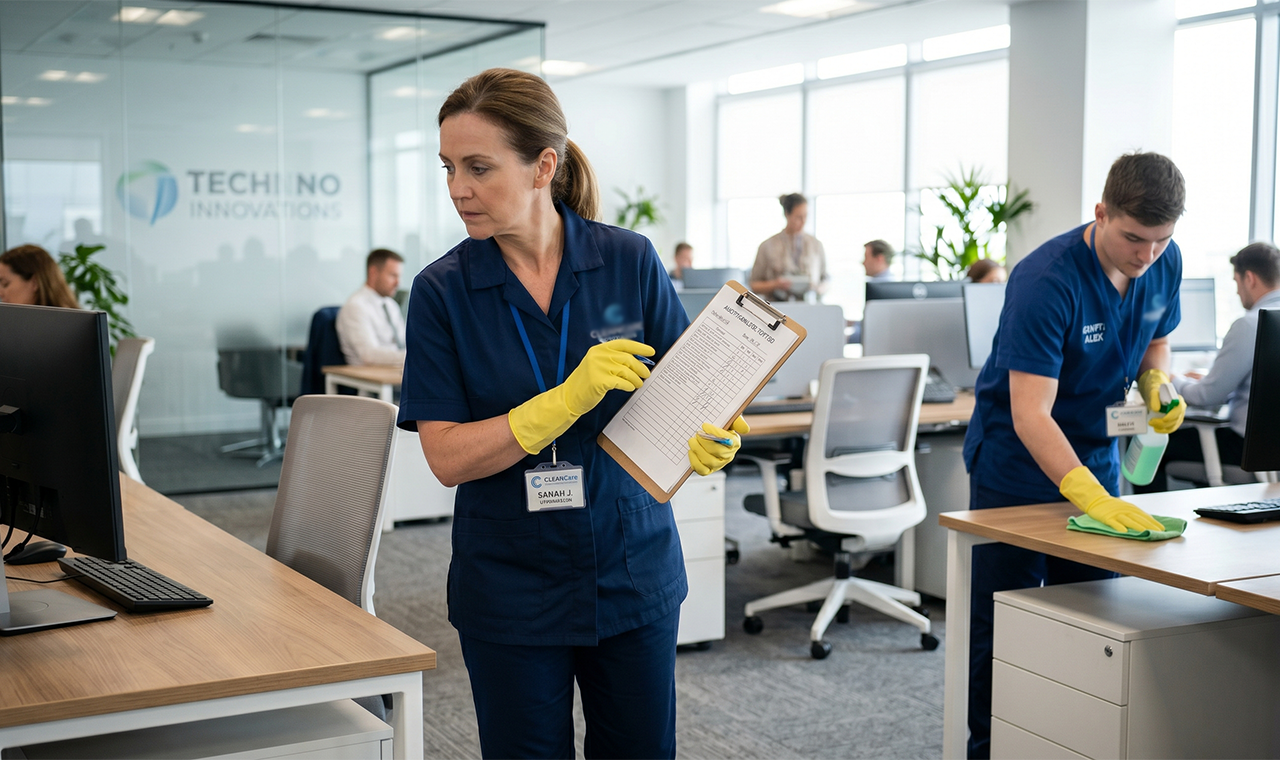
Most facilities managers never see a cleaning audit happen. A report arrives, it shows a score, and the contract carries on.
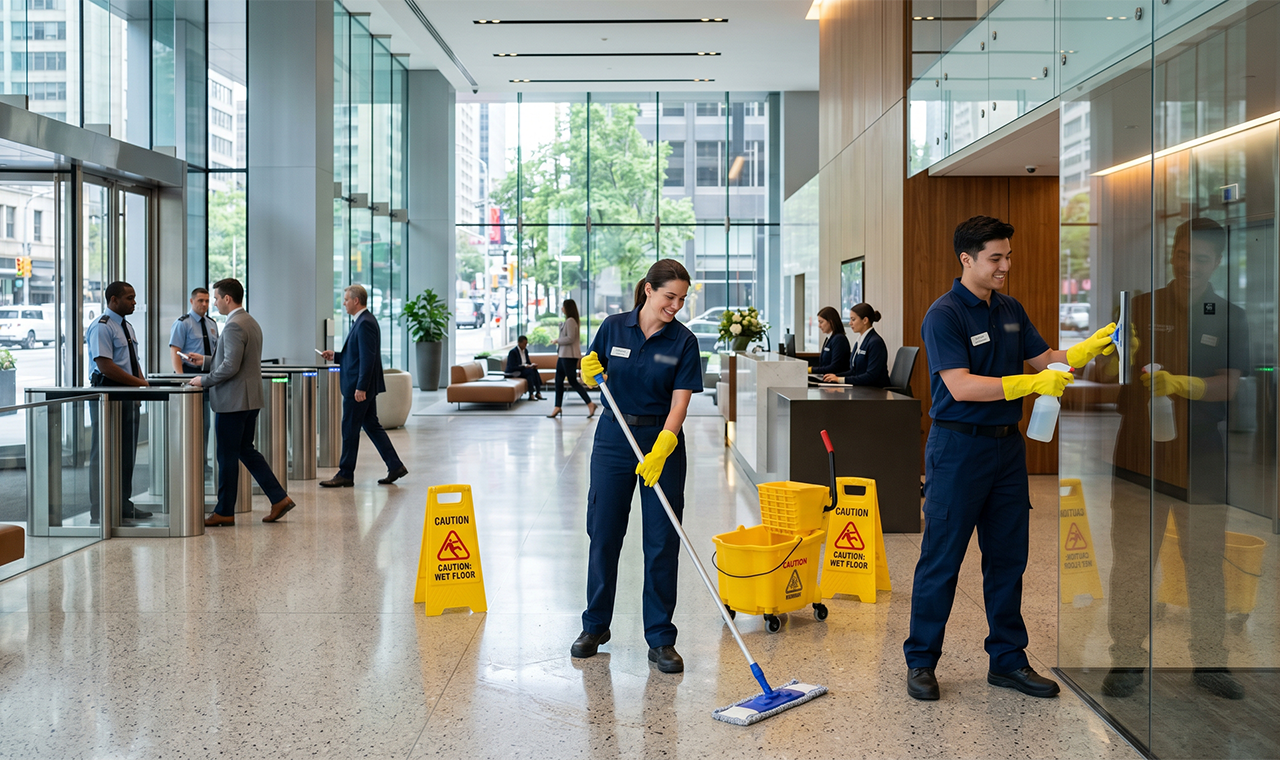
Commercial cleaning is a soft facilities management service, and it’s the most visible one your building has.
Cleaning Quote